
Understanding Autism
— UNDERSTANDING AUTISM
What is Autism?
Autism Spectrum Disorder (ASD), is a complex, lifelong developmental condition that typically appears during early childhood and can impact a person’s social skills, communication, relationships, and self-regulation. The Autism experience is different for everyone. It is defined by a certain set of behaviors and is often referred to as a “spectrum condition” that affects people differently and to varying degrees. While there is currently no known single cause of Autism, early diagnosis helps a person receive resources that can support the choices and opportunities needed to live fully.
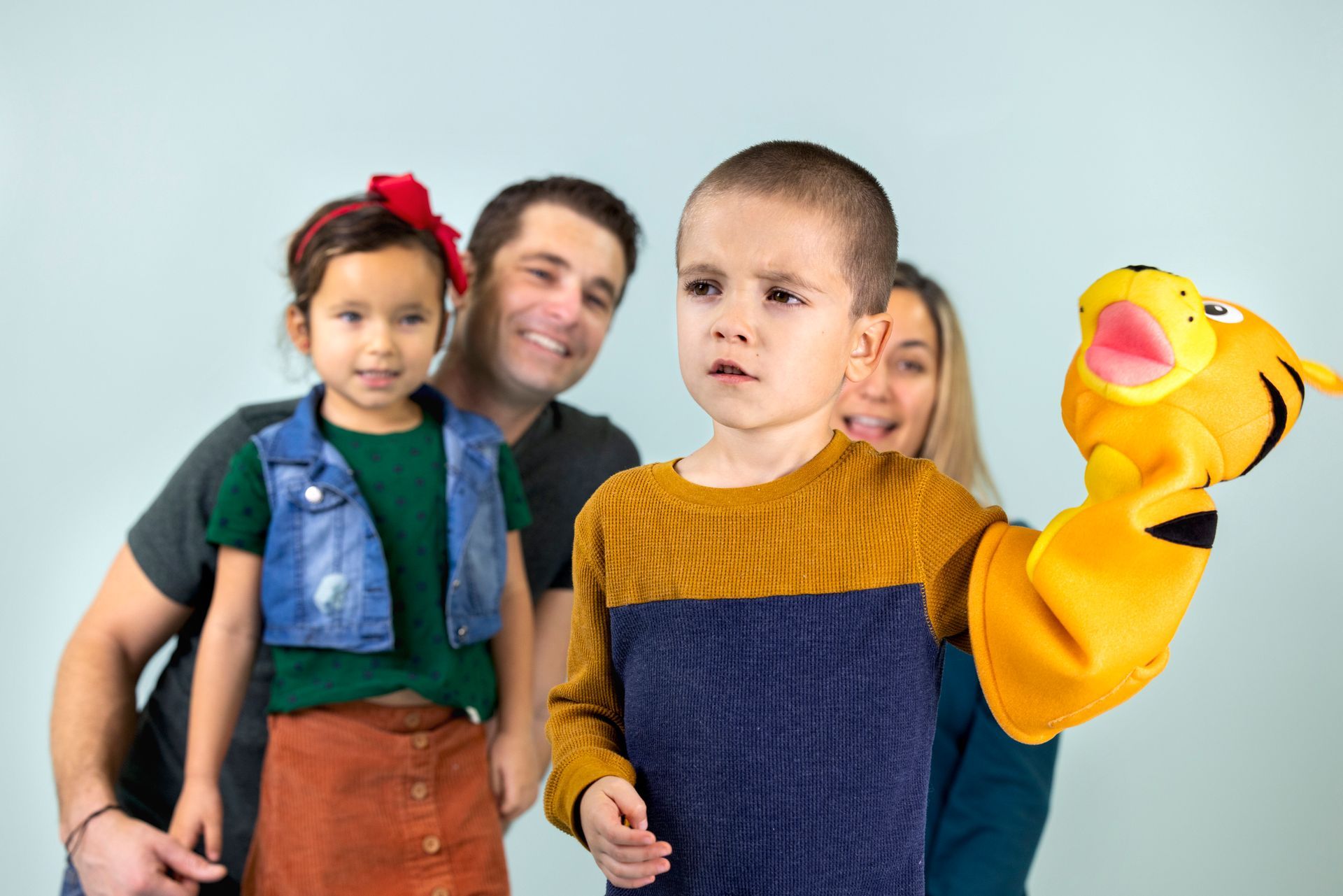
— UNDERSTANDING THE DIAGNOSIS
How is Autism diagnosed?
Although Autism can be diagnosed at any age, it is described as a “Developmental Disorder” because symptoms generally appear in the first 2 years of life. Autism is characterized in the American Psychiatric Association’s Diagnostic and Statistical Manual (DSM-5), which is used by clinicians to diagnose Autism.
Within the DSM-5, there are three main criteria:
- Difficulty with communication and interaction with others
- Restricted, repetitive patterns of behavior, interests, or activities
- Symptoms that affect the ability to function in school, work, and other areas of life
The DSM-5 criteria require that the core features of Autism be present in early childhood. However, for some children, the symptoms may not fully manifest until social demands exceed the person’s capacity to cope with them. In addition, challenges may be masked by learned coping strategies and support.
— THE EVALUATION PROCESS
What Does an Autism Evaluation Include?
It's important to note that no single test diagnoses Autism. Clinicians typically combine:
- A detailed developmental history
- Interviews with parents or caregivers
- Direct observation of the child
- Standardized assessment tools
- Information from schools or other providers when available
This comprehensive evaluation helps determine whether the DSM-5 criteria are met and whether Autism best explains the child's developmental profile.
— EARLY IDENTIFICATION
Autism Signs & Characteristics
Autism impacts an individual throughout the lifespan. However, research shows that early diagnosis can lead to improved quality of life. The behaviors of Autism may be apparent in infancy, but they usually become clearer during early childhood. As part of a regular health visit, your child’s doctor should perform developmental screenings focused on Autism. This screening is recommended at ages 18 and 24 months for all children.
Your doctor will encourage you to ask specific questions about your child’s developmental progress. The National Institute of Child Health and Human Development (NICHD) developed a detailed list of behaviors, listed in four categories: communication, social behavior, stereotyped behavior, and other behavior. Additionally, the Centers for Disease Control and Prevention (CDC) developed a list of Signs and Symptoms, which can be found here.
Resource Hotline
Resource Directory
Service Navigation
Support Groups
Programs for youth, teens, and adults
Family Outings
Park Days
Workshops and Webinars
Signature Annual Events
Advocacy initiatives
Mission Possible: Teen Advocacy Program
Training and Education
Family Support
— COMMON CHARACTERISTICS —
Recognizing the Signs of Autism
These characteristics vary widely and do not necessarily mean your child is Autistic. However, if your child is showing these behaviors, a screening is encouraged. Many families start by voicing their concerns with their child’s primary physician, with referrals being made to a specialist for further evaluation.
Social Behavior
- Prefers solitary or parallel play rather than engaging in associative or cooperative play with other children.
- Preference for predictable, structured play over spontaneous or make-believe play.
- May not respond to name being called.
- Struggles to make eye contact to communicate interest and/or needs.
Communication
- Delayed speech development or not at all
- Repetition in language or movement, such as repeating the same word or sounds, hand flapping, or any repeated movement
- Atypical nonverbal communication, including avoiding eye contact, giving few facial expressions, or having a monotone voice
Stereotyped Behavior
- Extremely distressed by changes, including new foods or changes in schedule or routine
- Strong, persistent interest in a specific topic, part of a toy, or item
Other Behavior
These characteristics vary widely and do not necessarily mean your child is autistic. However, if your child is showing these behaviors, a screening is encouraged. Many families start by voicing their concerns with their child’s primary physician, with referrals being made to a specialist for further evaluation.
AUTISM
A culture.
A community.
A unique human experience.
— Autism Society Ventura County
You Belong Here
We offer 20+ unique social, recreational, support, and informational programs designed for individuals with Autism and their families.
— Our Process
Learn The Process, For us to Help You Further!
Lorem Ipsum is simply dummy text of the printing and typesetting industry. Lorem Ipsum has been the industry's standard dummy.
STEP
01
Register
Lorem Ipsum is simply dummy text of the printing and typesetting industry. Lorem Ipsum has been the industry's standard dummy text ever since the 1500s.
STEP
02
Register
Lorem Ipsum is simply dummy text of the printing and typesetting industry. Lorem Ipsum has been the industry's standard dummy text ever since the 1500s.
STEP
03
Register
Lorem Ipsum is simply dummy text of the printing and typesetting industry. Lorem Ipsum has been the industry's standard dummy text ever since the 1500s.
—COLLABORATION INFO
Your Donation Matters
Lorem Ipsum is simply dummy text of the printing and typesetting industry. Lorem Ipsum has been the industry's standard dummy.
— EVENTS—
Join Us and Learn More
Lorem Ipsum is simply dummy text of the printing and typesetting industry. Lorem Ipsum has been the industry's standard dummy text ever since the 1500s, when an unknown printer took a galley of type and scrambled it to make a type specimen book.
Be Updated,
Join Our Newsletter
Contact Us
We will get back to you as soon as possible.
Please try again later.